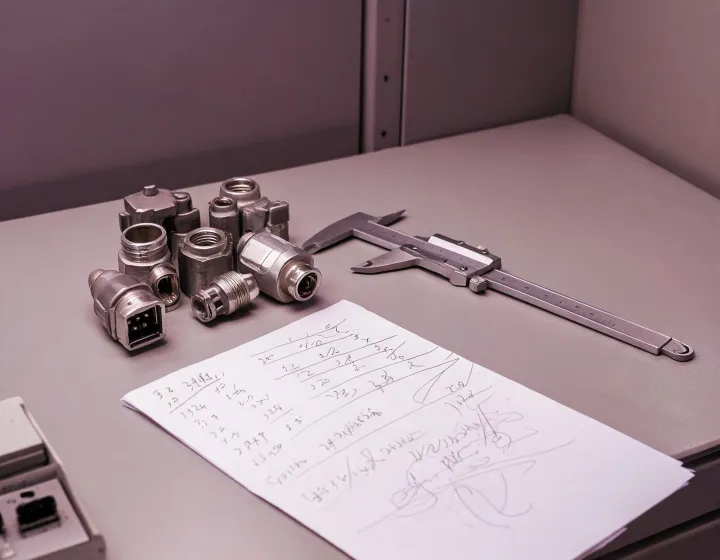
Evidence questions before a shortlist
What should the buyer prepare?
A one-page requirement with family, contacts, pitch, current, voltage, termination, plating, ingress protection, quantity, US destination and timing. Mark unknown cells as open questions rather than guessed values. Optional budget needs a currency and a per-piece or whole-order basis. High-end, mid-range, budget or undecided is a preference, not a plant rating.
How does supplier matching work?
The desk sends the same brief to plants that can build the described interface. Each reply must name the exact model. A photograph of a similar shell is not interchange evidence. Host compatibility, code applicability and acceptance stay with the buyer and the proposed supplier.
Which host fields stay off the connector line?
Forwarding rate, wavelength, optical budget, receiver sensitivity, transmit power, dispersion, MIMO, channel width, gain and VSWR describe other equipment. Use them when the host RFQ has those lines. Do not let a connector quote absorb them. Insertion loss and return loss belong to the optical or RF path, not to a DC contact resistance stated in milliohms. Measurement accuracy of a contact-resistance meter is requested with the test record. Frequency range matters when the supplier claims a mixed power-and-signal insert.
Can the desk publish a savings figure?
No quotation file on this site supports a savings comparison. The useful step is to line up Incoterm, freight, duties, plating and test scope, then read the factory numbers on that shared basis.
Original family or a second source?
An installed flange drawing often tracks the original shell family with fewer open dimensions. A second source remains quotable when contact diameter, plating thickness and the current-at-temperature cell match the drawing. Put the two offers on separate rows. Do not collapse them into one word that hides a plating change from gold to tin.